Skip to content
GLASS TORQUE

Window Materials

Tempered glass, laminated glass, and vehicle windows

Heat treatment and lamination give automotive glass very different strengths and breakage behavior.

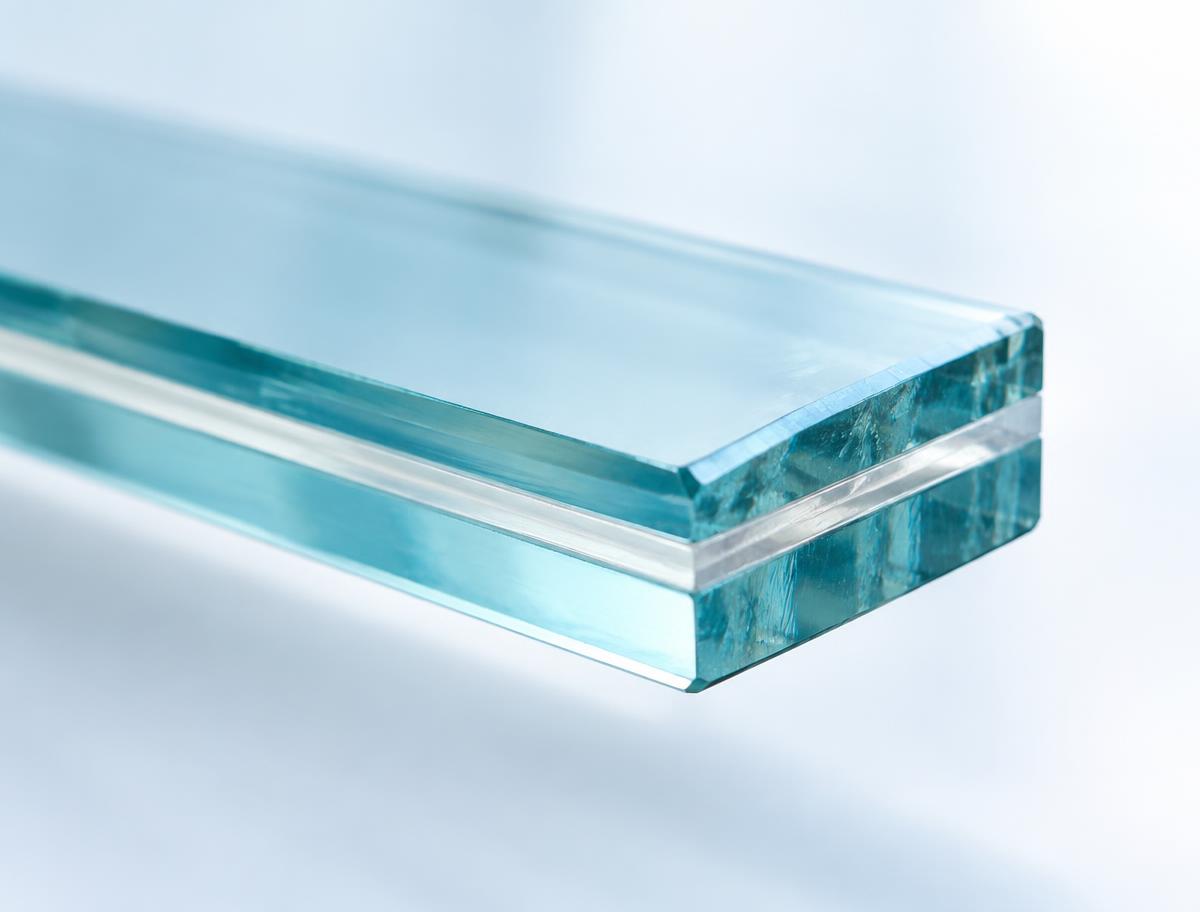
Edge of a laminated glass panel showing two glass layers bonded around a clear interlayer

Laminated Automotive Glass

Laminated glass bonds two sheets of glass to a flexible plastic interlayer, creating a single pane that behaves very differently from ordinary glass when struck.

Heat and pressure fuse the glass sheets to an interlayer, most commonly polyvinyl butyral (PVB). If the glass cracks, the interlayer holds fragments in place instead of letting them scatter.

Characteristics

  • Typically two glass plies around a 0.76 mm interlayer
  • Cracks in a spider-web pattern
  • Can be curved into complex shapes

Common applications

  • Windshields
  • Some side windows and sunroofs
  • Acoustic and solar-control glazing

Advantages

  • Retains fragments after breakage
  • Helps reduce outside noise
  • Blocks most UV radiation

Limitations

  • Heavier than a single tempered sheet
  • Damage is usually not repairable once cracks spread
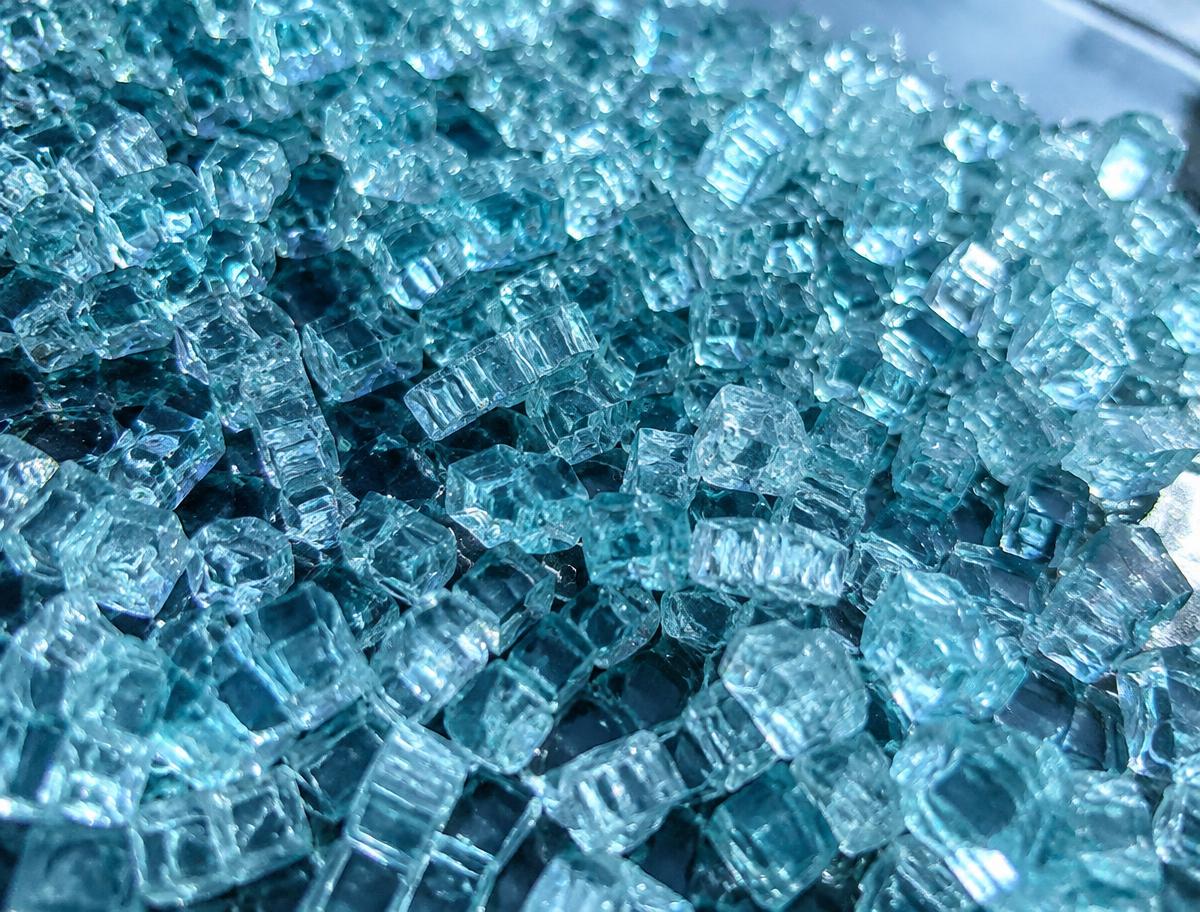
Close view of broken tempered glass in small blunt cube-shaped pieces

Tempered Glass

Tempered glass is a single sheet that has been heat treated to become much stronger than standard annealed glass.

The glass is heated to around 620 C and then rapidly cooled with air jets. The surface hardens in compression while the core stays in tension, which raises strength and changes how it breaks.

Characteristics

  • Roughly four to five times stronger than annealed glass
  • Shatters into small, blunt granules
  • Cannot be cut after tempering

Common applications

  • Many side windows
  • Many rear windows
  • Some quarter glass panels

Advantages

  • High surface strength
  • Fragments are less sharp
  • Lighter single-layer construction

Limitations

  • The whole pane breaks at once
  • Leaves an open opening when shattered
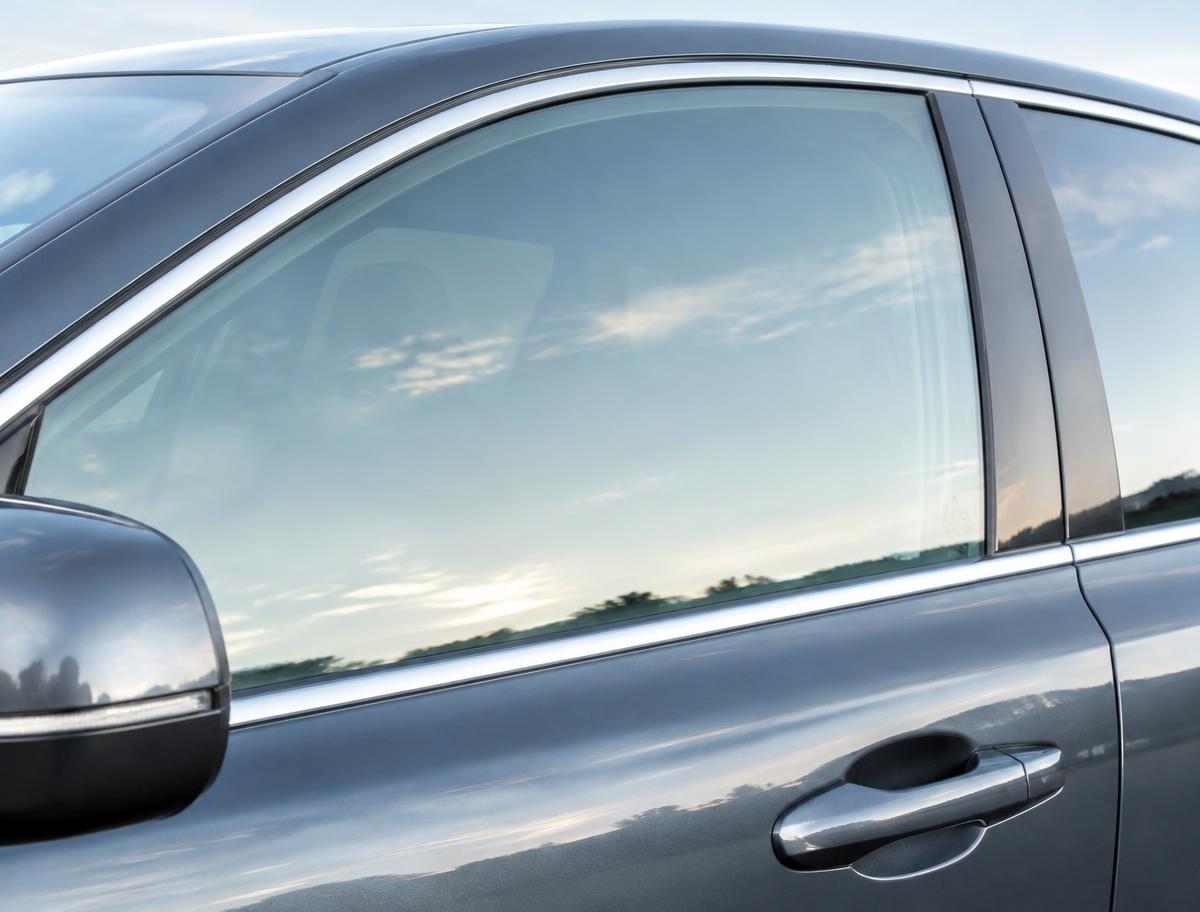
Side window of a dark gray sedan reflecting a pale evening sky

Side Window Glass

Side windows balance strength, weight, and smooth movement inside the door.

Most are tempered single sheets, though laminated side glass is increasingly used for noise reduction and occupant containment in some vehicles.

Characteristics

  • Often 3 to 5 mm thick
  • Tempered or laminated depending on design
  • Edges finished for regulator tracks

Common applications

  • Front and rear door windows
  • Fixed quarter glass

Advantages

  • Lightweight
  • Durable for repeated opening and closing

Limitations

  • Tempered versions shatter fully when broken
  • Laminated versions add weight
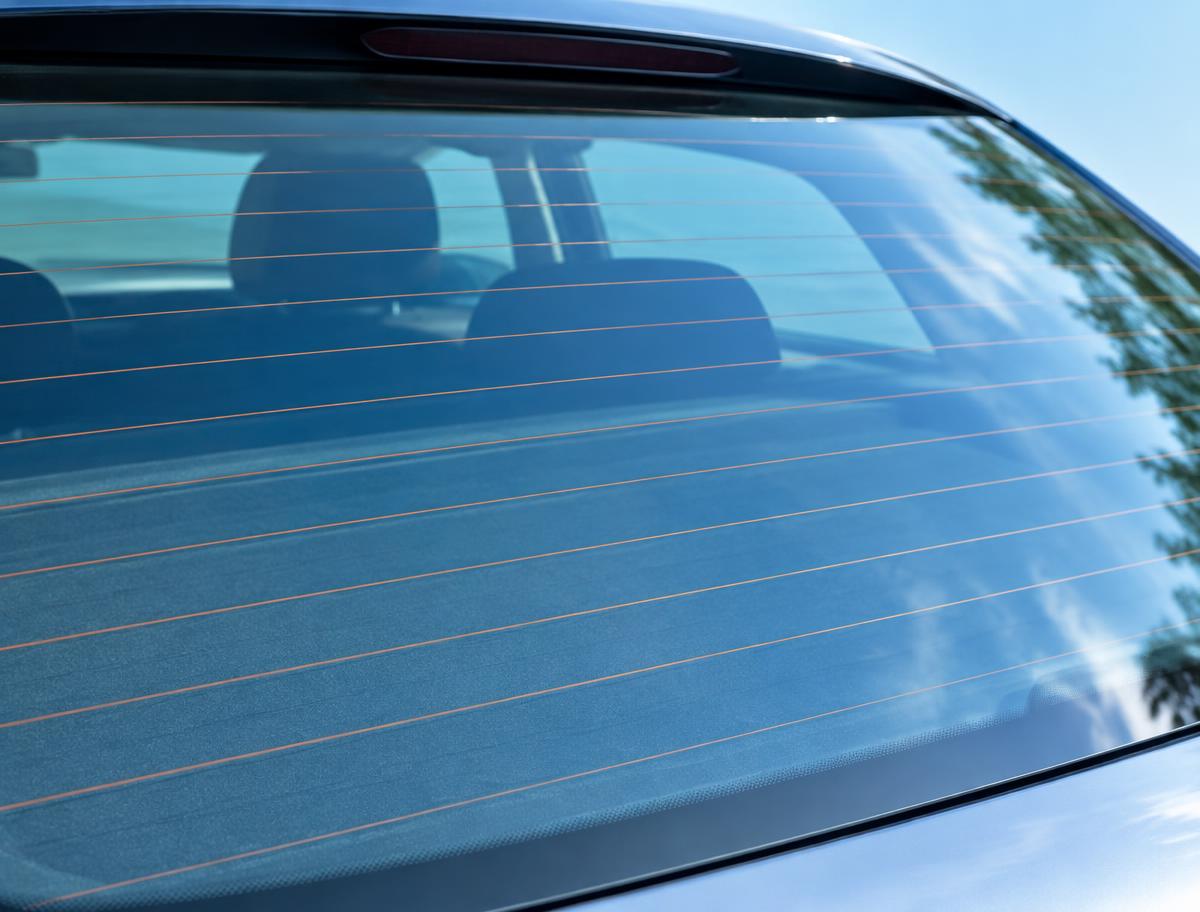
Rear window of a car with thin horizontal defroster lines across the glass

Rear Window Glass

Rear windows, also called backlites, often carry printed heating elements and antennas.

Conductive silver lines are screen printed onto the glass before tempering, then fused into the surface during heating.

Characteristics

  • Usually tempered
  • Printed defroster grid
  • May include antenna traces

Common applications

  • Sedan and hatchback rear glass
  • Tailgate glazing

Advantages

  • Integrated defrosting
  • Strong single-sheet construction

Limitations

  • Printed lines can be damaged by abrasive cleaning
  • Shatters fully when broken

Laminated vs. tempered glass

PropertyLaminated GlassTempered Glass
LayersTwo glass plies and an interlayerOne heat-treated sheet
When brokenCracks, fragments stay bondedBreaks into small granules
Common useWindshieldsMany side and rear windows
UV blockingHighLower

Each option suits different vehicle needs. Neither is universally better.

Get SMS Updates