Windshield Technology
How a laminated windshield is built
A windshield looks like one pane, but it is a bonded assembly engineered for clarity and fragment retention.
Cross-section of a windshield
- 1. Outer glass layer. Faces the weather. Typically about 2.1 mm of annealed glass shaped to the vehicle profile.
- 2. Plastic interlayer (PVB). A tough, flexible film that bonds both plies. When the glass cracks, the interlayer helps hold broken fragments together so they stay attached rather than falling into the cabin.
- 3. Inner glass layer. Faces occupants. Carries the mirror button, sensor brackets, and the inner frit border.
From flat glass to finished windshield
- 01
Curved shaping
Matched glass plies are heated together and sag or press bent so both layers share the same curve.
- 02
Lamination
The PVB film is placed between the plies, air is removed, and an autoclave applies heat and pressure to form a clear bond.
- 03
Design considerations
Engineers balance optical clarity, curvature, thickness, sensor windows, heating elements, and how the glass bonds into the body.
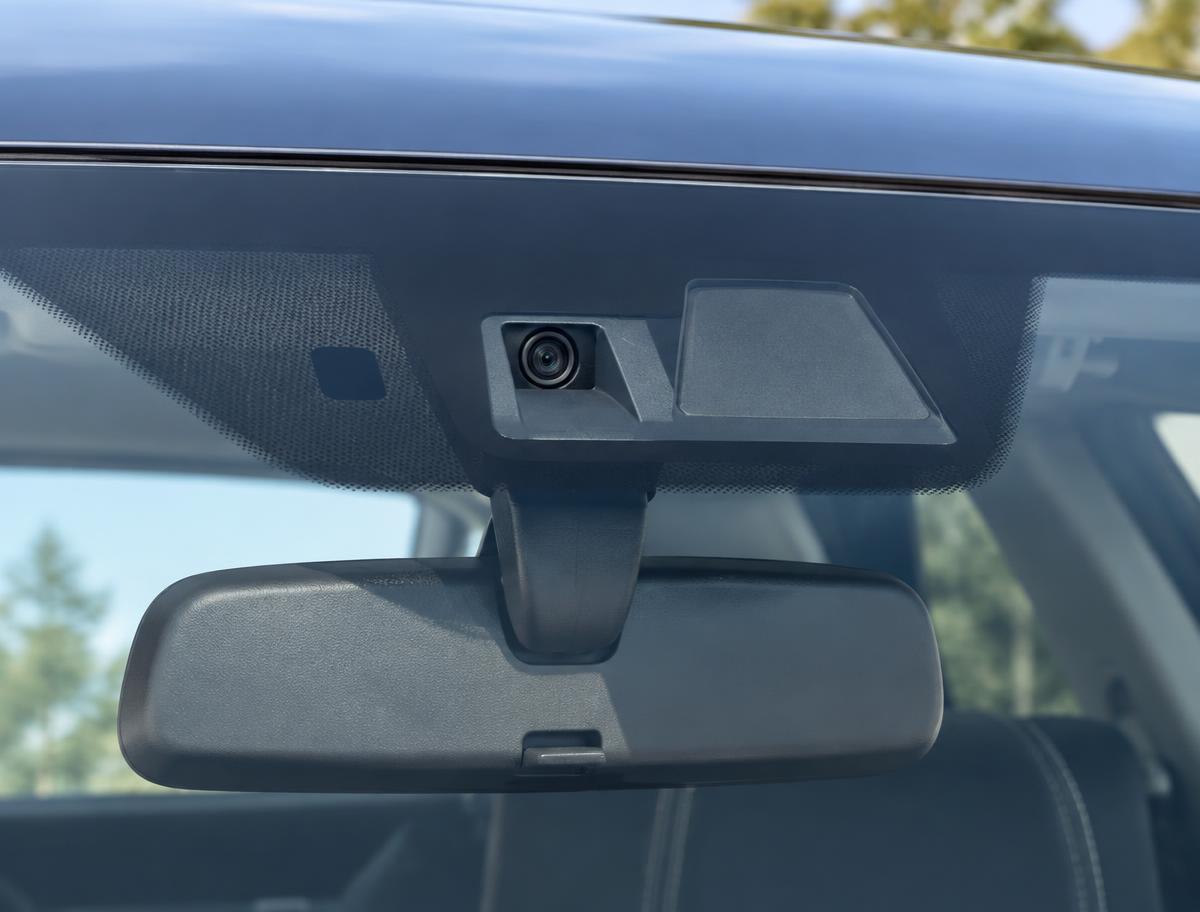
Camera and sensor areas
Many newer windshields include clear, distortion-controlled zones and brackets for forward cameras and rain or light sensors. Not every vehicle has these features.